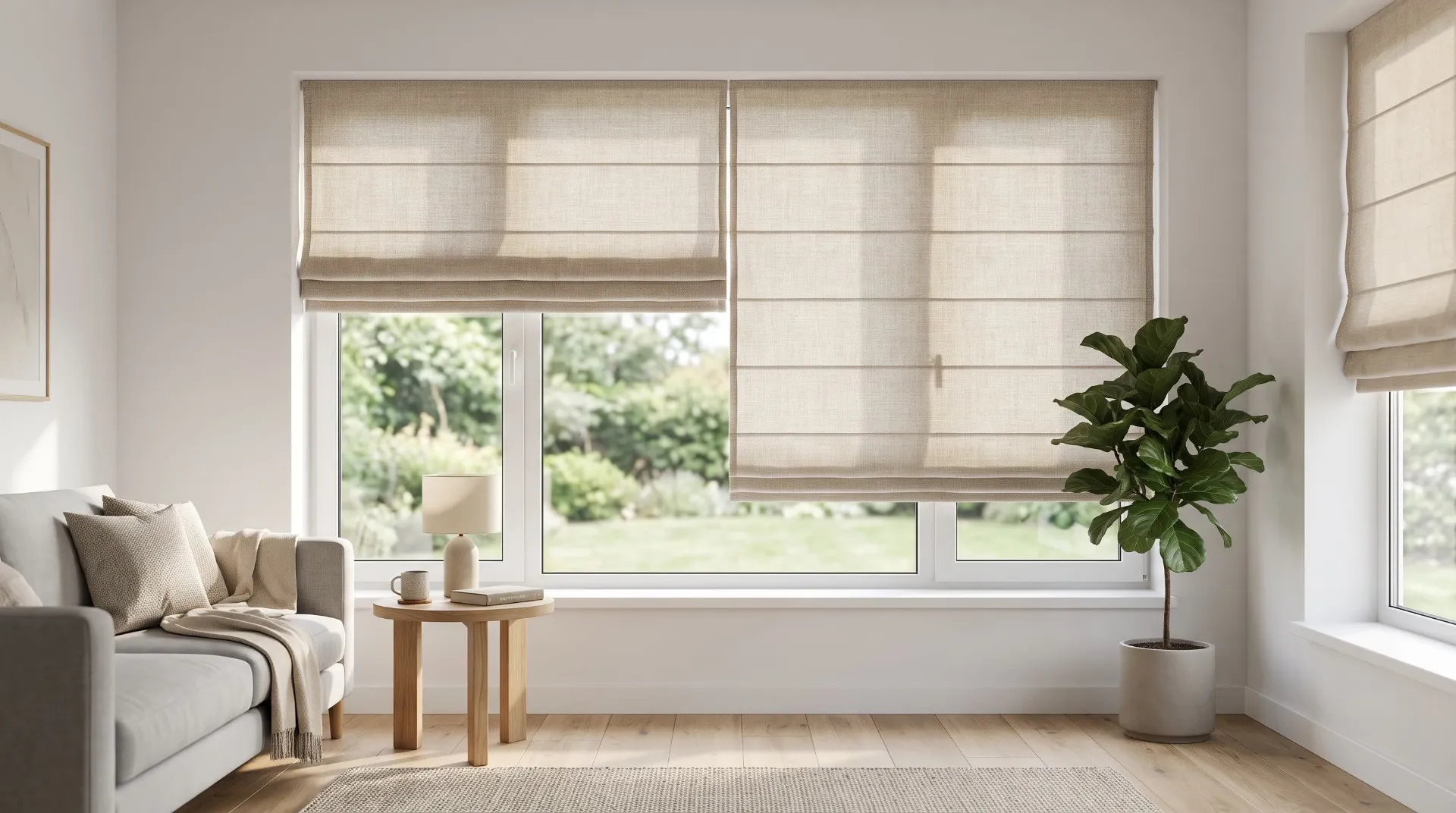
Roman blinds are fabric blinds that lift into neat horizontal folds. They suit bedrooms, living rooms and dining rooms where you want the warmth of fabric without full-length curtains. Choose a blackout lining for bedrooms, a lighter or sheer fabric for living spaces, and motorisation for tall or hard-to-reach windows.
How roman blinds work
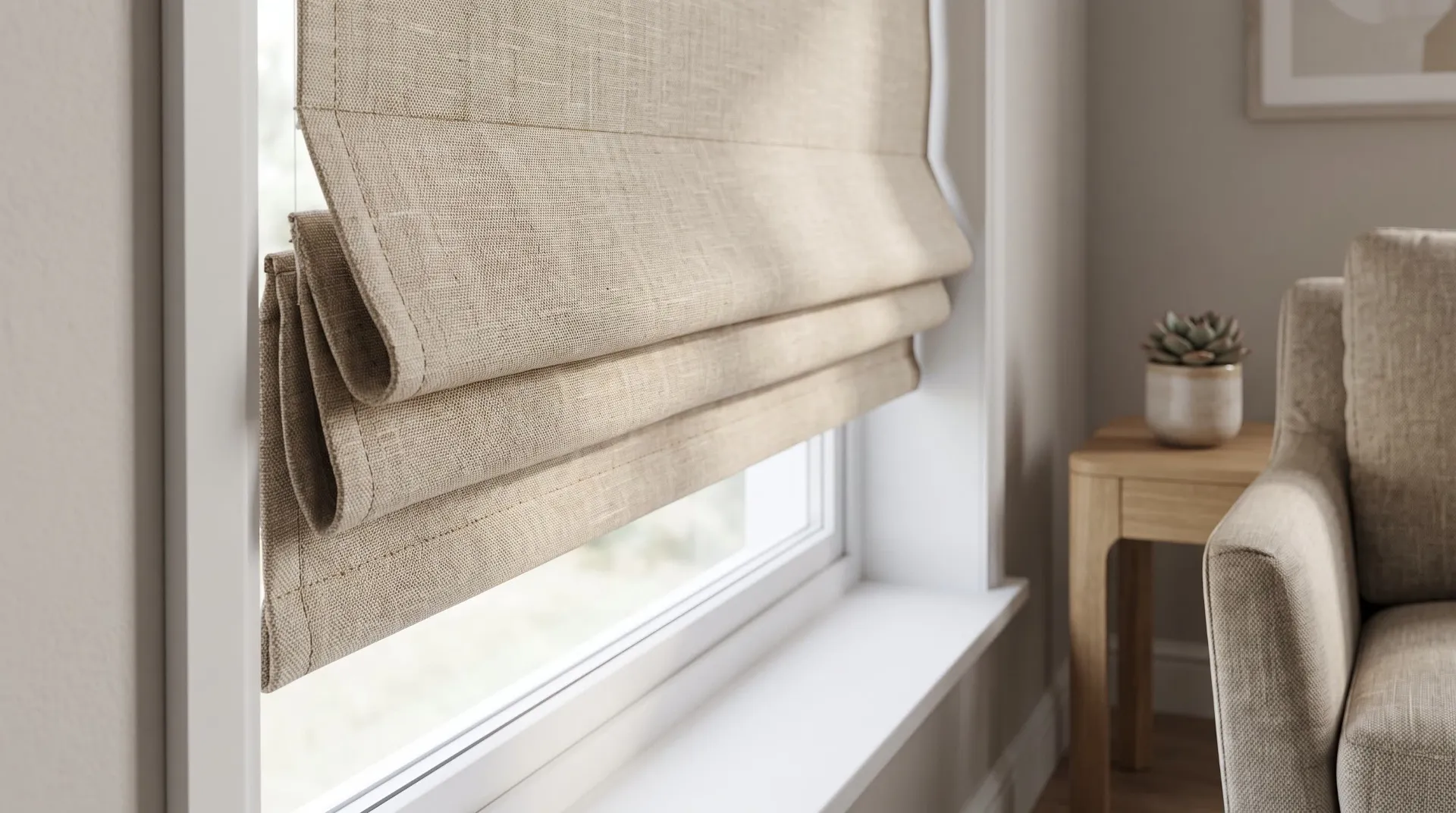
A roman blind is a flat panel of fabric with rods or cords behind it. When raised, it stacks into soft horizontal folds at the top of the window. Lowered, it lies flat and shows the full fabric, which makes it ideal for patterns and textured weaves.
Choosing the fabric
Linens and textured weaves give a relaxed, natural look. Plain cottons keep the folds crisp. Patterned fabrics show at their best because the blind lies flat when down. Ask to see samples in your room’s light, because colour shifts noticeably between morning and afternoon.
Blackout, sheer and printed options
- Blackout roman: full light control under elegant folds, for bedrooms.
- Sheer roman: soft luminosity and gentle privacy, for living spaces.
- Printed roman: patterned fabrics for personality; see printed blinds.
Where roman blinds work best
Bedrooms, living rooms, dining rooms and studies, especially on windows where full-length curtains would get in the way of furniture or a unit below the sill. They are less suited to kitchens and bathrooms, where moisture and splashes call for an easy-clean roller blind instead.
Measuring, lead time and fitting
Roman blinds are made to measure, so we measure every window on a free visit before fabrication. Blinds typically take 10–15 working days, and most homes are fitted in a single visit. A motorised roman is worth considering for tall windows, where lifting the fabric by hand is heavy.
If you want the lowest-cost blind for a utility room, a roman blind is not the obvious choice; a simple roller blind will do the job for less.